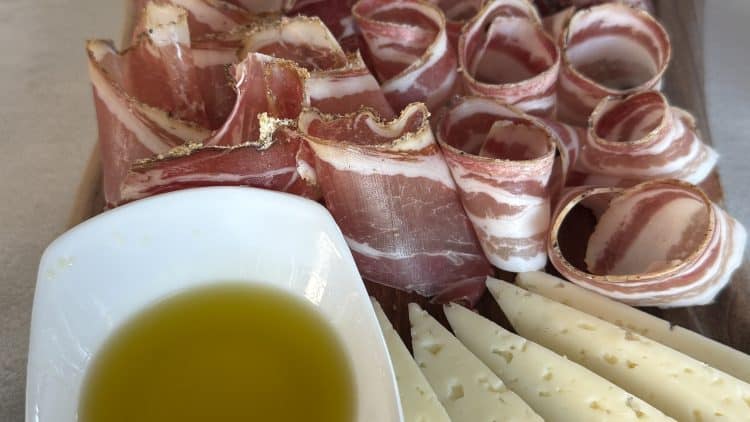
Few foods represent Istrian gastronomy as perfectly as Istrian prosciutto (Istarski pršut). This traditional dry cured ham has been produced in the region for centuries and today holds a Protected Designation of Origin (PDO) status in the European Union, meaning it must follow strict regional production methods.
Unlike many other Mediterranean prosciuttos, Istrian pršut is not smoked. The pork leg is trimmed of skin and fat, salted with sea salt, and seasoned with garlic, black pepper, and herbs such as bay leaf and rosemary. It is then pressed and air dried for at least a year, allowing natural air and the region’s climate to slowly cure the meat and develop its distinctive flavor.
The result is a prosciutto that is deeply aromatic, delicately salty, and slightly herbaceous, often served paper thin as an appetizer with local cheeses, bread, olive oil, or melon.
The heart of Istria’s prosciutto production lies in the central part of the peninsula, especially around Tinjan, Sveti Petar u Šumi, Pazin, and Višnjan, an area sometimes referred to as the “Prosciutto Road of Istria.” These villages host family run producers who still follow traditional curing techniques passed down through generations.
Visiting a prosciutto producer is one of the most authentic culinary experiences in Istria. Many offer tastings, cellar tours, and opportunities to learn about the curing process while sampling prosciutto alongside local wine, cheese, and olive oil.
- Pršutana Buršić – One of the largest and most well known producers of traditional Istrian prosciutto with a tasting estate near Vodnjan.
- Pisinium Prosciutto – Award winning producer from Pazin whose pršut has won top honors at regional competitions.
- Pršutana Antolović – Family producer in Tinjan known for high quality traditional pršut and local cured meats.
- Pršuti Milohanić – Well respected artisan producer in Tinjan specializing in traditional air dried prosciutto.
- Pršutana Jelenić – Award winning prosciutto maker known for producing some of the best examples of Istrian pršut.
- Pršutana Dujmović – Small traditional producer specializing in classic Istrian cured meats. Istra.hr
- Pršutana Compari – Family run producer offering authentic Istrian prosciutto and cured meat products.
- Pršutana Danieli – Boutique prosciutto producer known for carefully cured pršut made using traditional techniques.
- OPG Mekiš Moreno – Artisan producer known for traditional prosciutto and cured meats from central Istria.
- OPG Franjul Ljubica – Family farm producing traditional Istrian prosciutto using classic curing techniques.