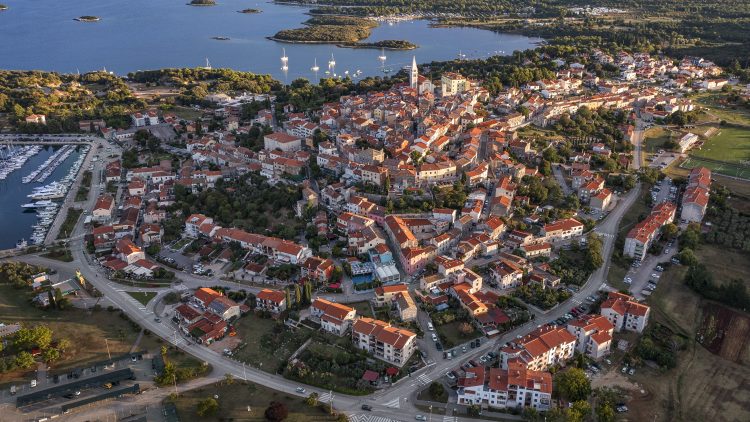
The city of Vrsar has seen it all, from its earliest prehistoric hill fort to its current status as one of the most well-kept, neat and tidy resorts on the Istrian Peninsula. Taking its name from the pre-Illyrian Usaria, translating “ur” to “springs”, Vrsar and the nearby village of Funtana provided important water resources for seafaring visitors. With the Roman era followed by Goth, Byzantine, then Carolingian rule, Vrsar emerged as a free municipality during the Middle Ages, ruled by its own bishops from the 13th to the 18th centuries. It then became part of the Austrian empire, and endured Yugoslavian rule after WWI. Vrsar became part of the European Union when Croatia was admitted in 2013. Known for its quarry, the summer sculptors school at Montraker is a popular August retreat. As the Porec Bishops’ summer residence, Bishop’s Castle is another important 12th century landmark with a beautiful view of the Lim Canal, a 12 km fjord with crystal clear water perfect for swimming or harvesting shellfish. Vrsar also has a bit of a wild streak, perhaps initiated by Giacomo Casanova’s exciting visits and memoirs of the 18th century. It is known as the home of the first commercial naturist camp in Europe, Koversada. With deep roots, Vrsar spans the ages from ancient to modern, serving tasty seafood cuisine, providing comfortable seaside lodging, and sharing a beautiful archipelago of 18 uninhabited islands with tourists from around the globe.
Top Attractions and Activities in Vrsar
-
Vrsar Old Town – A picturesque hilltop town with cobblestone streets, stone houses, and panoramic views over the Adriatic and surrounding islands.
-
Church of St. Martin – Historic parish church in the old town featuring beautiful views from its bell tower.
-
St. Mary of the Sea Basilica – A Romanesque church dating back to the 12th century located near the harbor.
-
Vrsar Harbor and Marina – Scenic waterfront filled with fishing boats, sailboats, restaurants, and cafés. A great place for evening strolls.
-
Lim Fjord (Lim Channel) – Stunning fjord-like bay just north of Vrsar known for dramatic scenery and oyster and mussel farms. Boat tours are popular here.
-
Dušan Džamonja Sculpture Park – Outdoor sculpture park featuring monumental works by Croatian artist Dušan Džamonja overlooking the sea.
-
Vrsar Archipelago – A group of 18 small islands off the coast ideal for boat trips, kayaking, and swimming.
-
Koversada Beach – One of the largest natural beaches in Istria, known for crystal-clear water and beautiful coastal scenery.
Top Restaurants in Vrsar
-
Konoba Kod Luce – Highly regarded seafood restaurant known for fresh fish, homemade pasta, and warm service.
-
Fančita – Family-run restaurant famous for grilled meats, seafood, and generous portions of traditional Istrian dishes.
-
Restaurant Trošt – Harborfront seafood restaurant with beautiful sunset views and excellent grilled fish.
-
Konoba Petra – Authentic Istrian tavern serving homemade pasta, truffle dishes, and seafood specialties.
-
La Contadina – Charming restaurant offering Mediterranean cuisine, seafood, and local wines in a cozy setting.
-
Restoran Orca – Seaside restaurant known for seafood platters and Adriatic fish dishes.
-
Restaurant Leonardo – Elegant dining spot in the old town with Mediterranean cuisine and great terrace views.
-
Casanova – Romantic hilltop restaurant offering Italian and Mediterranean dishes with panoramic views.